About the Centre
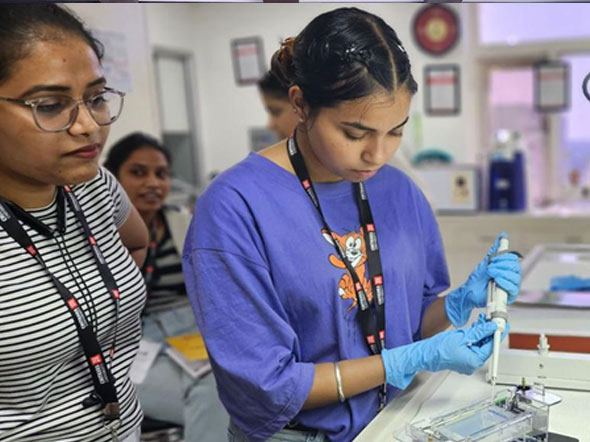
The Centre for Life Sciences (CLS) at Chitkara University stands out as a dynamic hub for advanced research and innovation in molecular biology, biochemistry, and bioinformatics. CLS focuses on cutting-edge areas such as biomarker discovery, network analysis of signaling events in organ crosstalk, and the molecular underpinnings of non-communicable diseases like cardio-renal syndromes and diabetes. The Centre integrates experimental and computational approaches, including machine learning-based algorithms for protein network analysis, and for pioneering personalized e-health tools. The Centre employs a broad spectrum of advanced techniques, from plasmid cloning and gene expression analysis to protein and microscopy studies, enabling comprehensive studies of gene regulation, cell signaling, and disease mechanisms. Collaborative projects with industry partners and interdisciplinary teams further amplify the Centre’s impact in personalized diagnostics and therapeutic innovation. The Centre has a strong track record of mentoring PhD and postdoctoral researchers, organizing specialized workshops, and fostering entrepreneurial ventures through successful start-ups and grant-funded projects. Its achievements are recognized nationally and internationally, with innovations earning prestigious awards and funding from bodies such as BIRAC, Intel-DST, and the Gandhian Young Technological Innovation Award.
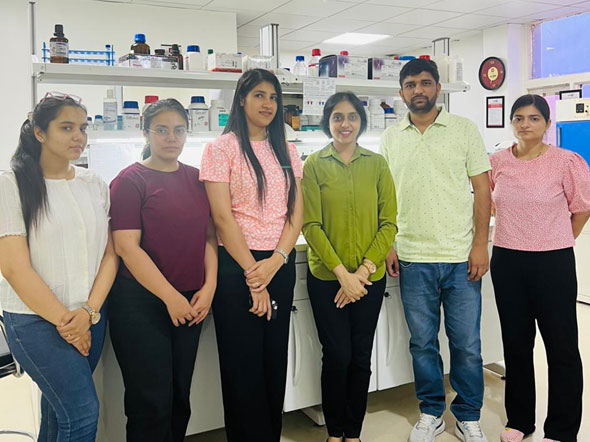
Name Details of members: Centre Lead: Varsha Singh; Members: Manpreet Kaur, Neha Dahiya, Payal Grover
Key features
- Focuses on advanced research in molecular biology, biochemistry, and bioinformatics, with a strong emphasis on non-communicable diseases such as cardio-renal syndrome and type-2 diabetes.
- Specializes in biomarker discovery, network analysis of signaling events in organ crosstalk, and the development of personalized algorithms for disease risk prediction (e.g., the e-CaRe tool for cardio-renal patients).
- Integrates experimental and computational approaches, including machine learning-based protein network analysis and translational research for personalized healthcare solutions
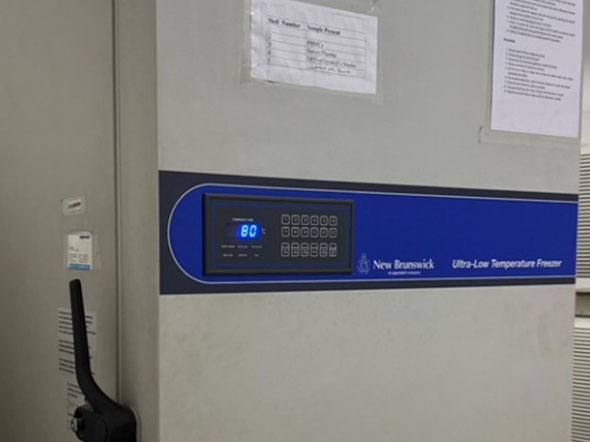
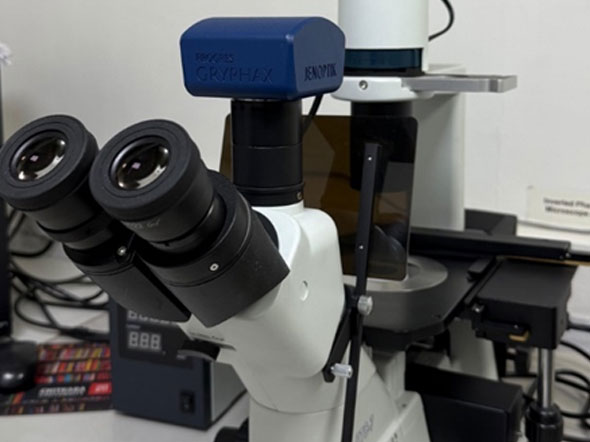
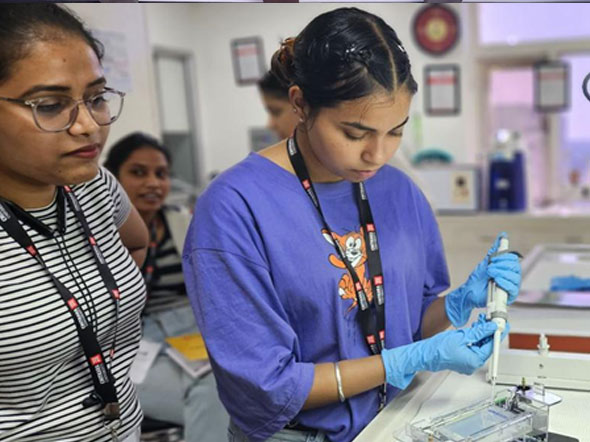
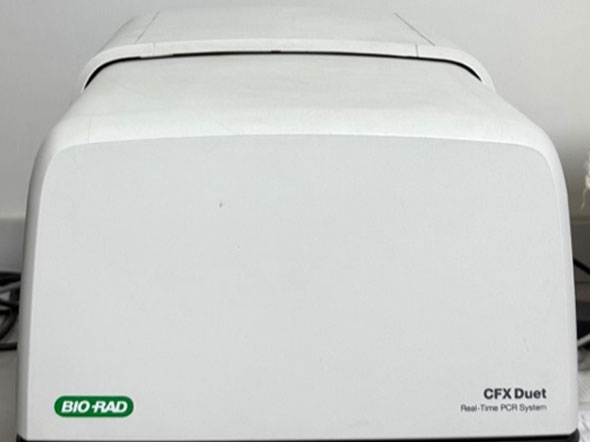
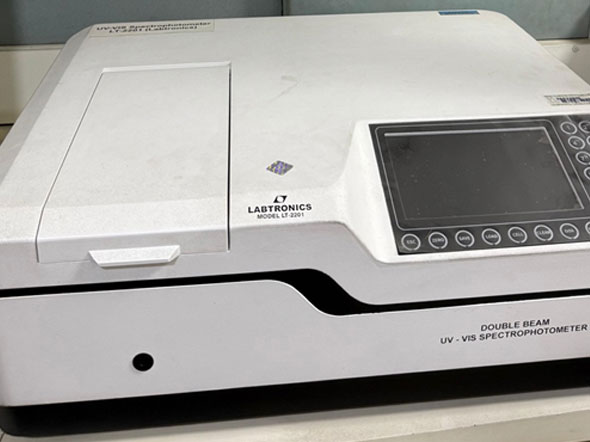
- Employs a wide range of advanced laboratory techniques such as plasmid cloning, gene expression analysis, microscopy, flow cytometry, and in vitro cell culture for comprehensive disease mechanism studies
- Actively collaborates with industry and interdisciplinary teams to advance personalized diagnostics and therapeutic innovations
- Strong record of academic mentorship, guiding PhD and postdoctoral researchers, and organizing specialized workshops and training programs
Seating capacity: 6
List of Workshops/conferences/seminars/Activities conducted under the centre
- Three-days’ Workshop on In silico methods and analysis for proteomic, genomic and metabolomic data in Molecular Biology, 24th – 26th September 2020, Convener: Dr. Varsha Singh
- Two-days’ Workshop on Grant Writing Process for Innovative and Entrepreneurial Ideas, in collaboration with Indira Gandhi Delhi Technical University for Women, IGDTUW, New Delhi, 30th July to 31st July 2020, Organizer Dr. Varsha Singh
- Special expert lecture on Quality management in Research, by Prof. N. Rajini, Kalasalingam Academy of Research & Education, Tamil Nadu, 19th February 2021, Organizer Dr. Varsha Singh
- Six-days’ workshop on Data analysis for Healthcare Professionals, With External Experts: Dr. Vivek Verma (Assam University) & Dr. Jitender Kumar (Kurukshetra University), September 20th to 25th September 2021, Organizer: Dr. Varsha Singh
- Six-days’ Workshop on Systematic Review and Meta-analysis in Healthcare, In collaboration with Gastrointestinal Infection Society of India, 30th May – 4thJune 2022, Organizer Dr. Varsha Singh
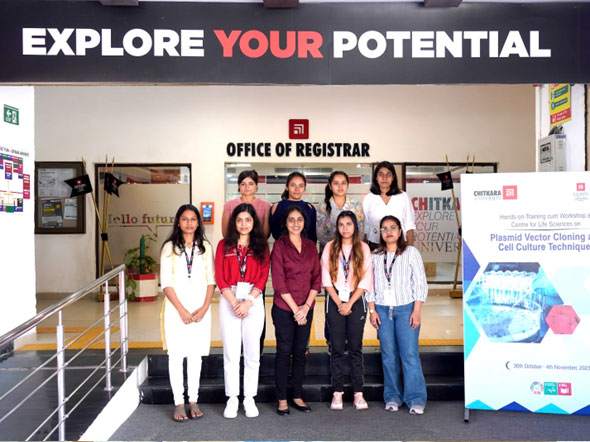
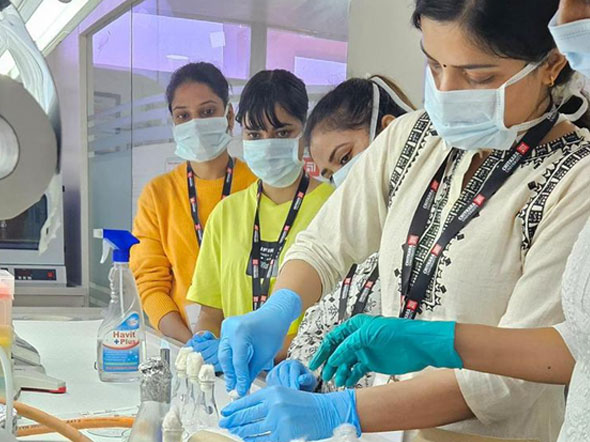
- Six-days’ Hands-on-training cum Workshop on Plasmid Vector Cloning and Cell Culture Techniques 30th October – 4th November 2023
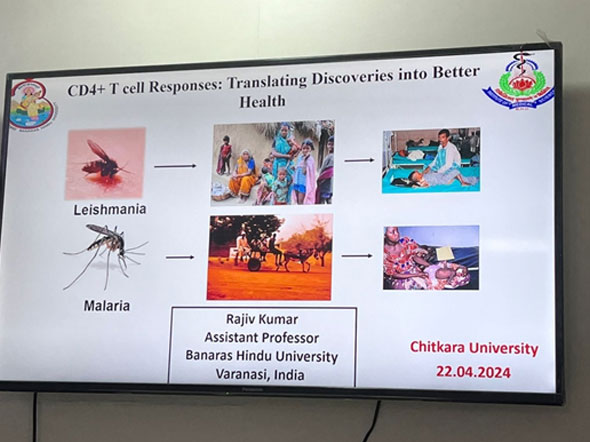
- Expert talk by Dr. Rajiv Kumar on “CD4+ Cell Responses: Translating Discoveries into Better Health” on 22nd April 2024. Dr. Kumar, a prominent immunologist leading his team at Banaras Hindu University, Varanasi, 22nd April, 2022, Organizer- Dr. Varsha Singh
Resource Person: Dr. Varsha Singh
List of Research/Innovations/Research Publications
Publications
- Singh V, Singh V, Thakur OP, Kumar A, Yarramaneni S. Study of Structural Changes Induced in Copper-based Metal-Organic Framework during Photocatalytic Dye Degradation of Methylene Blue using Vibrational Spectroscopy. Journal of Alloys and Compounds. 2025 Mar 29:180073.
- Gupta, H., Saini, I., Singh, V., Singh, V. and Mishra, B., 2024. Enhancing photocatalytic activity via the formation of heterojunctions introduced through post-metalation of metal-organic frameworks with silver ions. Physica Scripta, 99(10), p.1059a3.
- Shweta, Singh V, Singh V, Yarramaneni S, Ashiq M, Kumar K, Gautam P, Kumar A. Photocatalytic Activity of MWCNT-Reinforced MoS2 Nanosheets. Journal of Electronic Materials. 2024 Jun 13:1-1.
- Gupta H, Saini I, Singh V, Singh V, Yarramaneni S, Grover P. Fast decomposition of an organic contaminant in wastewater using Zn and Mn bimetallic metal-organic frameworks. Polyhedron. 2024 Jun 20:117116.
- Gupta H, Saini I, Singh V, Kumar T, Singh Varsha. Tailoring MOF-5 Photocatalysts: Low-Temperature Synthesis and Solvent Variations for Enhanced Performance in Dye Degradation. Bulletin of Chemical Reaction Engineering & Catalysis. 2024 24:15.
- Dahiya N, Kaur M, Singh Varsha. Potential roles of circulatory microRNAs in the onset and progression of renal and cardiac diseases: a focussed review for clinicians. Acta Cardiologica. 2023 Jun 9:1-5.
- Singh Varsha. Current challenges and future implications of exploiting the ‘OMICS’ data into nutrigenetics and nutrigenomics for personalized diagnosis and nutrition-based care. Nutrition. 2023 Feb 10:112002
- Singh Varsha. F1Fo adenosine triphosphate (ATP) synthase is a potential drug target in non-communicable diseases. Molecular Biology Reports. 2023 Jan 30:1-4.
- Singh Varsha. Intracellular metabolic reprogramming mediated by micro-RNAs in differentiating and proliferating cells under non-diseased conditions. Mol Biol Rep. 2021 Dec;48(12):8123-8140.
- Singh Varsha*#, Rani Raj, Singla Anshu Preliminary Algorithm for a Personalized Diagnosis of Cardiovascular Disease and Dependent Renal Complications using Decision Tree. 2021;87, 175–189. https://doi.org/10.1007/s43538-021-00026-5. Special issue: Indian National Young Academy of Science (INYAS).
- Rani Raj, Singh Varsha. Overexpression of YKL-40 (CHI3L1 gene) in patient fluids may be a potential predictive marker for early detection of comorbidity in non-communicable disease Medical Hypotheses. 1;143:110076
- Singh Varsha. Can vitamins, as epigenetic modifiers, enhance immunity in COVID-19 patients with non-communicable disease? Current Nutrition reports. 2020; 13:1-8 (DOI: 10.1007/s13668-020-00330-4).
- Singh Varsha. Polycystic kidney disease: a paradigm in major kidney disorders. Proceedings of the Indian National Science Academy. 2019; 85(4):863-84.
- Mohammad Nooruz Zaman, Singh Varsha. Effect of blink rate among Visual display terminals and non-Visual display terminal users. Indian Journal of Public Health Research & Development. 2019; 10(8):139-44.
- Zaman Mohammad Nooruz, Singh Varsha. Computer Vision Syndrome in Visual Display Terminal users (VDT), 2018, Indian Journal of Public Health Research & Development. 2019. 9:12; 1967-71, doi: 5958/0976-5506.2018.02278.7
- Singh Varsha. Digitized Innovative Solutions to Screen and Diagnose Ocular Health and Thyroid Disorders for the Underserved. The BRICS Scientist, Science & Technology Papers. 1:1, 2019
- Singh Varsha, and Sherpa Mingma*#. “Neuronal-Like Differentiation of Murine Mesenchymal Stem Cell Line: Stimulation by Juglans regia L. Oil.” Applied biochemistry and biotechnology1 (2017): 385-395.
- Singh Varsha. “DCoH: A novel biomarker for diagnosing acute kidney injury.” Medical hypotheses 95 (2016): 27-30.
- Singh Varsha, and Saluja Nitin. “Phylogenetic and promoter analysis of islet amyloid polypeptide gene causing type 2 diabetes in mammalian species.” International Journal of Diabetes in Developing Countries4 (2016): 477-489.
- Singh Varsha, et al. Hepatocyte nuclear factor-1β: A regulator of kidney development and cystogenesis. Indian journal of nephrology2 (2015): 70.
- Singh, Varsha, and Rupali Panwar. “In vivo antioxidative and neuroprotective effect of 4-Allyl-2-methoxyphenol against chlorpyrifos-induced neurotoxicity in rat brain.” Molecular and cellular biochemistry 1-2 (2013): 61-74.
Book Chapters
- Singh Varsha (2024). Singh, V. (2024). Theranostics: Integrated Diagnostics and Therapy Using Nanomedicine. In: Gautam, V., Kumar, R., Das Manandhar, K., Kamble, S.C. (eds) Nanomedicine. Nanotechnology in the Life Sciences. Springer, Cham. https://doi.org/10.1007/978-3-031-72467-1_17
- Singh Varsha (2022). Digital and Personalized Healthcare System for COVID-19 and Future Pandemics. In: Pandemic Detection and Analysis Through Smart Computing Technologies Jul 7 (pp. 55-85). Apple Academic Press.
- Thakur D, Shyam V, Singh Varsha (2020) Quality Issues in Meat and Poultry Processing Sector. In: Thakur M., Modi V. (eds) Emerging Technologies in Food Science. Springer, Singapore (pp. 47-58)
Grants & Funding
| S. no. | Title | Funding body | Year |
| 1 | Development of Multiuse Smart Eyecare Diagnostic Solution | NewGen IEDC | 2022-2-23 |
| 2 | Development of Novel, Low-cost, Portable Point-of-Care Integrated Diagnostic Imaging System for Ocular Health | Biotechnology Ignition Grant-BIRAC, Govt. of India | 2019-2022 |
| 3 | ThyroMeter | Intel-DST, Govt. of India | 2016-2017 |
| 4 | Neuronal cells produced from non- neuronal cell line using walnut oil | BIRAC SRISTI-GYTI Award | 2015 |
| 5 | ThyroMeter | BIRAC SRISTI-GYTI Award | 2015 |
Anything else (Patents)
Patents Granted: 5
Patents Filed: 10
| S. no. | Title | Date of filing | Application no. | Patent no. | Grant date | Type of patent |
| 1 | Device For Monitoring Compressed Median Nerve | 06/07/2021 | 202111030344 | 545749 | 24/07 2024 | UTILITY |
| 2 | Multilevel Human Simulator Based Device For Prediction Of Type 2 Diabetes | 29/01/2016 | 201611003236 | 461082 | 20/10/2023 | UTILITY |
| 3 | Cyclodextrin-based inclusion polymer as therapeutic agent delivery for treating dental carries and biofilm formation. | 25/09/2020 | 202011041762 | 440481 | 25/07/2023 | UTILITY |
| 4 | Thyrometer | 01-12-2017 | 202211045507 | 16-11-2018 | DESIGN |
Collaboration with any agency/Institute/Company, etc.
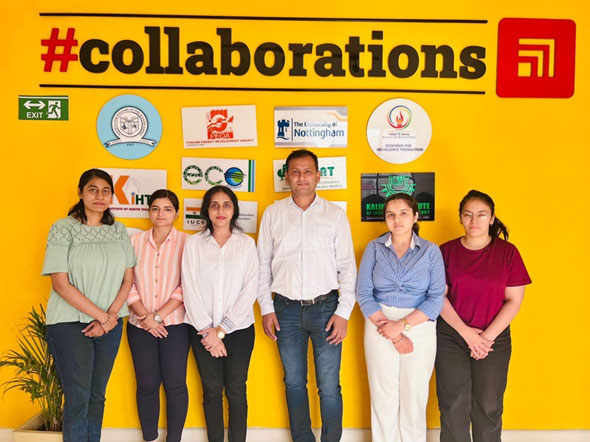
Centre for Life Sciences (CLS) hosts students from Netaji Subhas University of Technology, Delhi, and Central University of Jammu, Jammu, who spend 15-30 days working at CLS. The three institutions are currently collaborating on expanding research work towards the generation of synthesizing metal-organic frameworks (MOFs), pivotal porous crystalline materials, for industrial applications using the solvothermal technique. Centre for Life Sciences will now be working towards advancing MoFs towards drug delivery nanocarriers for drug loading capacity and controlled release at the target organ site in the ongoing work on non-communicable disease at CLS. The collaborative work has resulted in five publications and student exchanges.
Awards:
The lead PI has been facilitated by awards from national/international agencies:
- Top 20 in the 2nd BRICS Young Scientist Conclave, 2017, Hangzhou, China.
- Travel Award Fellowship supported by UNESCO to 27th FAOBMB Conference & International Meeting-44th MSBMB Conference as Young Scientist applicant in Kuala Lumpur, Malaysia, August 2019
- Young Scientist Award, IAMBSSCON 2019, PGIMER, Chandigarh.
- Gandhian Young Technological Innovation Award (GYTI) 2016, President’s Estate (Rashtrapati Bhawan), New Delhi.
- Travel Award Scholarship, Department of Science and Technology (DST), New Delhi, 2015 (SB/ITS-Y/05264/2014-2015)
- Winner in Healthcare and Biotech Sector, Startup Maharathi Challenge, Start-up Mahakumbh, New Delhi, India, 2025
- WiNNER, Women Entrepreneur Research Award-BIRAC-TiE, 2020 (Top 16)